



Ordering one filter coffee and one masala dosa at a Bengaluru darshini gives you two very different things, even though both belong to the same breakfast. One is made to refresh you; the other is made to satisfy your hunger. Brand communication works in a similar way. Articles, landing pages, advertisements and captions may all use words, but they are created to perform different jobs.
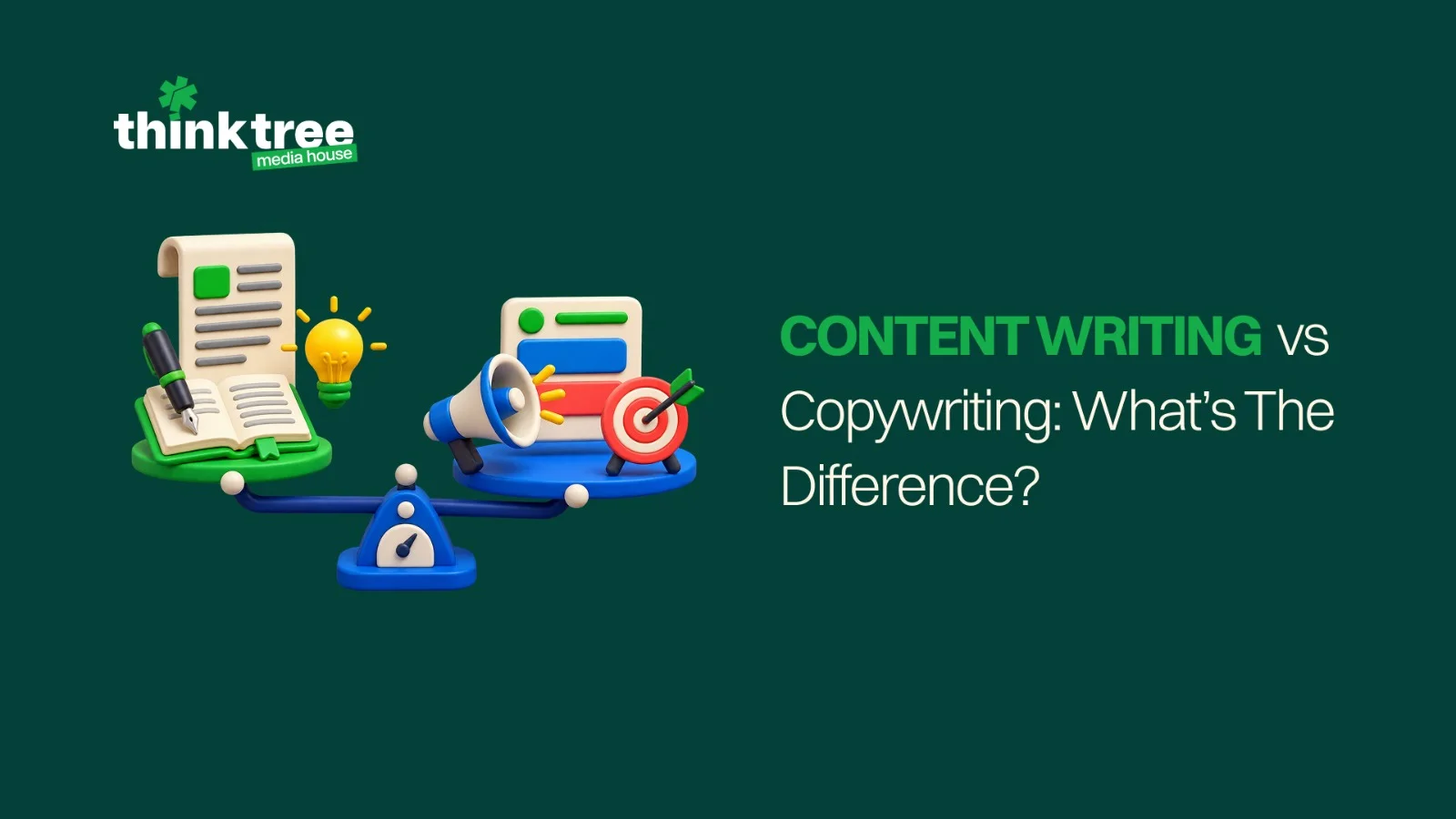
Content Writing usually helps people understand, learn or explore a subject over time. Copywriting is designed to persuade someone toward a specific action, such as clicking, enquiring, registering or purchasing. The two disciplines overlap, but treating them as interchangeable often produces communication that informs without converting or sells before earning attention.
Businesses need both. Useful content builds visibility and trust across a longer journey, while persuasive copy helps customers move when they are ready. Understanding their distinct roles makes briefs clearer, improves collaboration and allows every piece of writing to contribute to a wider commercial goal.
The Difference Begins with the Desired Response
General writing can express an idea, record information or entertain a reader without serving a marketing objective. Business writing is more deliberate. It begins by identifying an audience, a context and a response the communication should create.
Content is often designed for attention and understanding. A detailed guide can answer a search query, explain a difficult topic and make the company more credible. Copy is usually closer to action. A campaign headline, product message or call-to-action button must make a benefit feel relevant enough for the reader to respond.
This is the clearest way to understand content writing vs copywriting. The distinction is not simply long text versus short text. A long sales page can be copy, while a concise educational post can be content. Purpose determines the category more reliably than format or word count.
Content Builds the Relationship Over Time
Blogs, guides, case studies, newsletters and explainers help customers research at their own pace. Strong SEO content writing connects genuine search intent with useful, well-structured answers. It does not merely repeat a keyword; it understands why someone searched and gives them a reason to trust the source.
A professional Content writing service may therefore involve topic planning, research, information architecture, editorial standards and performance review. The value lies in building a connected body of material rather than publishing isolated articles. Each piece can attract discovery, answer a stage of the buying journey and guide readers toward another relevant resource.
The commercial effect is cumulative. Helpful content can earn search visibility, support sales conversations and remain useful long after its publication date. It gives the business a library of expertise that customers and internal teams can return to.
Copy Converts Interest into a Decision
Copy narrows the focus. It identifies a customer problem, frames the offer, communicates value, handles hesitation and makes the next step clear. The language is often more economical because every line must contribute to movement.
Effective copy writing services begin with positioning, not clever phrases. Writers need to understand what makes the offer relevant, who it is for, what evidence supports it and what action the reader should take. A memorable headline has limited value when the benefit beneath it is vague.
Good copy also adjusts to awareness. A cold audience may need context before a direct offer, while a returning visitor may only need reassurance and a clear button. Persuasion becomes stronger when it respects what the customer already knows.
Different Formats Require Different Balances
A brand website uses content and copy on the same pages. Website Content Writing explains the organisation, services and expertise, while conversion-focused lines organise attention and encourage enquiries. The result should feel coherent rather than like informative paragraphs interrupted by sales commands.
Product pages need accurate detail alongside persuasive benefits. Email campaigns may teach, nurture or sell depending on the stage. Brochures can combine explanation with strong calls to action. Even a case study uses narrative content to establish credibility before copy guides the reader toward a conversation.
The balance changes with context, but the transition should feel natural. A reader who has just received useful information should understand why the suggested next step is relevant to them.
Social Platforms Compress Both Disciplines
Social media content Writing works within limited attention, platform conventions and rapidly changing formats. Educational carousels, opinion posts and behind-the-scenes stories build familiarity. Promotional captions, launch announcements and lead advertisements need sharper persuasive direction.
The strongest social plans do not sell in every post. They create a rhythm of value, personality, proof and offers. That makes promotional messages feel like a relevant part of the relationship rather than an interruption. The caption, visual and destination page must also make the same promise; disconnected messages weaken trust after the click.
A Reliable Process Improves Both Content and Copy
Good writing begins before the first sentence. The brief should define the audience, objective, offer, channel, required information, desired action and tone. Research then supplies the customer language, category context and proof needed to write responsibly.
For content, the writer can map the reader’s questions and organise the answer in a logical sequence. For copy, the writer can identify the strongest proposition and build a hierarchy from headline to supporting proof and action. Drafting, editing and review should test clarity before style.
Subject expertise is equally important. Generic statements make both disciplines feel interchangeable because they lack real information. Interviews with product teams, founders, customers or sales staff reveal details that competitors cannot reproduce easily.
Editing Separates Useful Writing from More Writing
The first draft captures the argument. Editing tests whether every section earns its place. Content should remove repetition, strengthen transitions and make difficult ideas easier to understand. Copy should eliminate vague claims, prioritise benefits and ensure that the requested action feels proportionate.
Reading aloud often exposes awkward rhythm and inflated language. A factual review prevents unsupported promises. A final channel check ensures that the piece works where it will actually appear, whether that is a mobile screen, search result, email or printed brochure.
Artificial Intelligence Changes the Workflow, Not the Need for Judgment
Tools for AI content writing can accelerate research organisation, outline options and first-draft exploration. AI copywriting can generate headline variations, adapt messages for formats and help teams test different approaches. Used carefully, these capabilities reduce repetitive work and create more room for strategic thinking.
However, generated language often defaults to familiar structures, broad claims and a polished but indistinct tone. It may miss category nuance, misunderstand the offer or present uncertain information confidently. Publishing it without review can make the brand sound interchangeable with every competitor using similar tools.
Human direction remains essential. Someone must decide the idea, verify facts, protect the voice, understand cultural context and judge whether the message is responsible. AI is most useful as part of a controlled workflow with clear source material, editorial standards and accountable approval.
Brand Voice Must Remain Recognisable
Consistency does not mean repeating the same phrases. It means maintaining a stable point of view, vocabulary and level of formality across touchpoints. A financial brand may need calm precision, while a youth-focused food brand can be playful without becoming unclear.
Voice guidelines should include principles and examples rather than a list of adjectives alone. Showing how the brand explains, persuades, apologises and celebrates gives writers more useful direction. This also makes AI-assisted drafts easier to evaluate because reviewers can compare the result against observable standards.
Choosing the Right Support for the Business
Start with the communication gap. If potential customers cannot discover or understand the brand, a structured content programme may be the priority. If traffic is arriving but failing to enquire or purchase, the offer and conversion copy may need attention. Many businesses require an integrated approach because discovery and decision are parts of the same journey.
At Think Tree Media, strategy, content and creative execution are connected so that each asset has a defined role. An article can build authority, a social post can create interest and a landing page can turn that interest into action without changing the central brand idea.
Measurement should reflect purpose. Content may be evaluated through qualified traffic, engagement, search visibility and assisted conversions. Copy may be judged through clicks, enquiries, completion rates and sales. The numbers are useful when they connect back to the business objective rather than becoming isolated vanity metrics.
Conclusion
Content Writing earns attention by informing and building trust. Copywriting channels that attention toward a decision. Neither is a superior version of the other; they solve different communication problems and become more effective when planned together.
If your brand is publishing regularly but the words are not building understanding or action, it may be time to clarify the role of every format. Let us discuss your communication mix over a Bengaluru filter coffee and create a system that informs, persuades and remains recognisably yours. Contact Think Tree Media to get started.
