



Where do you draw the line?
A brand’s primary goal is to profit. However, today, its success is determined by more than just its offering. The consumer was crowned king and it became integral for brands to stay in their good books, one way or another. The best way to do this was for brands to control the narrative, and that’s where marketing came in.
As an agency, you know that your content is the bridge between a brand and the general public perception. Our job is to churn out stellar content that places your brand on a pedestal, regardless of whether it belongs there or not. However, it’s idealistic to assume that you must resonate with every brand you work with and that not doing so would compromise the quality of your work. The moment that a writer realises this is pivotal because they come to understand just how much power they hold. The unspoken truth is that good content can be devoid of emotion and still tug on the heartstrings of the masses. That’s not to say that pouring your heart into your work makes no difference, it just means that there are two types of writers – ones that are wizards of the written word and the other that dissect their heart on paper.
Take for instance one of the world’s greatest advertising campaigns – The Malboro Man. As the world came to know of the dangers of smoking tobacco, cigarette companies geared up for a war with science. Malboro on the other hand did not dispute this fact. Rather than altering their product, they decided to alter the perception of their product. Do you think that the masterminds behind the campaign genuinely believed that tobacco and manhood were linked? Or that the product would not lead to premature death? No. But, they still managed to convince millions that tobacco should trump health. And here we are, on the other side of the globe, decades later, still reeling from the success of the campaign.
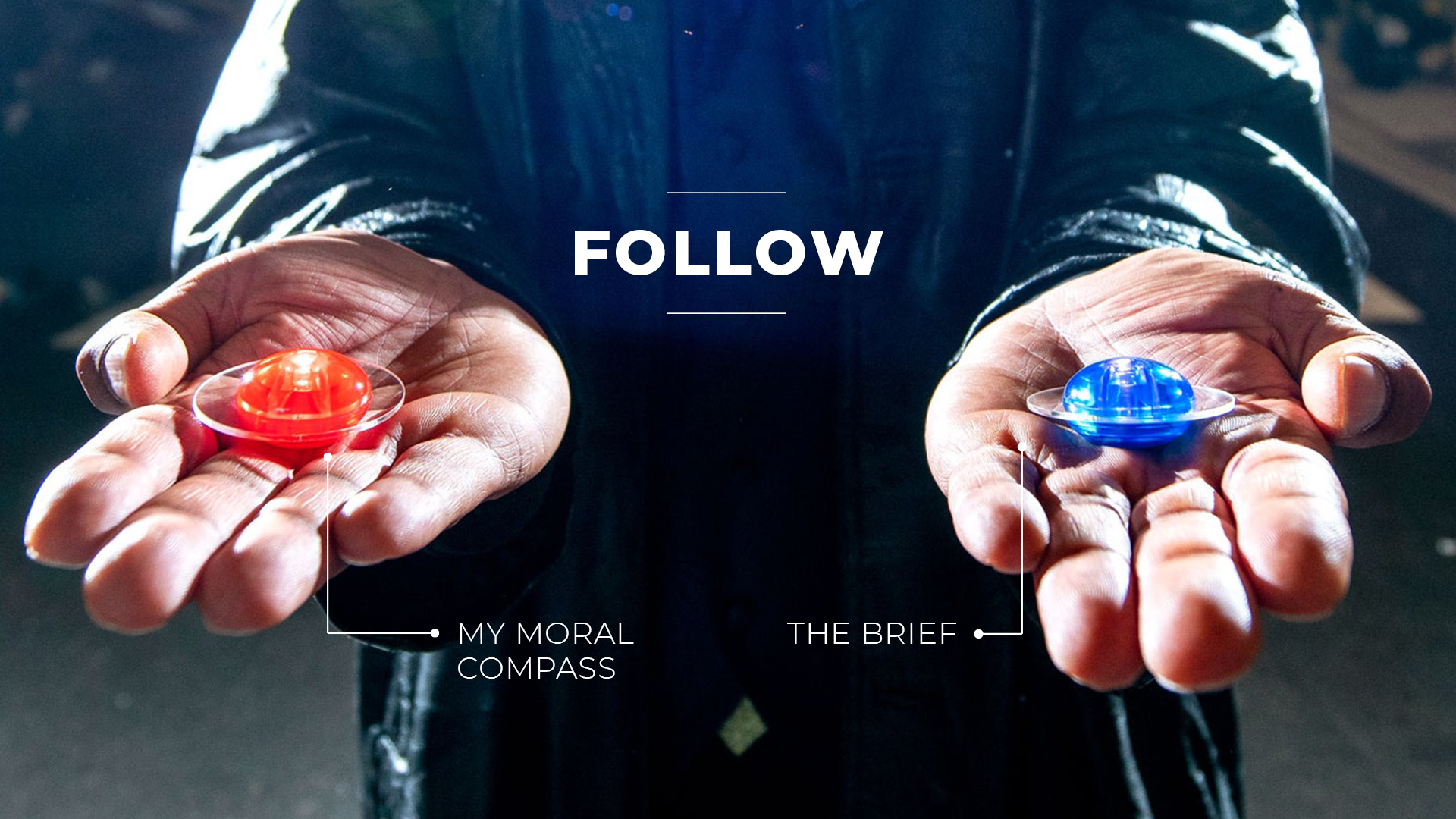
While this campaign brought to light the unfathomable capabilities of marketing, it also posed a moral dilemma – How do you know when to follow your moral compass and when to follow the brief? It’s not a decision one can breeze past, because it must be made every day. It’s easy to say ‘It’s just a job’ when your dilemma comes from being unsure about the particular brand of cream that you called ‘spectacular’ today. But as you progress through your career, there are chances that you will face a much stronger dilemma, writing for a brand you principally are opposed to. At this point, it won’t be just another decision, but instead will be a battle with your values. This weight is carried by every creative through their career, because they’re aware that content holds immense power. It has the ability to create change that can ripple through generations. As the size of the audience grows it begs the question – where do you draw the line?
