



Introduction
In today’s competitive digital landscape, your website serves as the frontline for customer acquisition, where every second counts toward conversions. UI UX design principles directly influence whether visitors bounce or become paying customers, with studies showing well-designed sites can boost conversion rates by up to 400%. Whether you manage e-commerce for luxury furniture brands or lead generation for Bangalore startups, mastering UX best practices ensures seamless user journeys that drive revenue.
This guide breaks down essential UI UX design principles and UI design tips focused on website conversion optimization. You will learn how to implement UX design elements that reduce friction, build trust, and guide users toward action, drawing from proven strategies tailored for Indian digital marketers. Think Tree Media’s UI/UX Design Services specialize in creating high-converting experiences for D2C brands and agencies.
Clarity Drives Immediate Engagement
Users form judgments in under 10 seconds, so prioritize crystal-clear messaging over clever visuals. Your hero section must instantly communicate value through bold headlines, benefit-focused subtext, and prominent CTAs like “Book a Free Consultation” or “Shop Now.”
Avoid jargon and ambiguity. For an Indian real estate site targeting premium buyers in Mumbai, a headline like “Luxury Apartments in Bandra Starting at ₹5 Cr” outperforms vague taglines, reducing bounce rates by 30% and lifting inquiries. This foundational UI UX design principle ensures users understand your offer before scrolling.
Visual Hierarchy Guides User Attention
Effective visual design uses size, color contrast, and spacing to direct eyes naturally toward conversion paths. Larger headings draw focus to benefits, while contrasting CTA buttons stand out against neutral backgrounds.
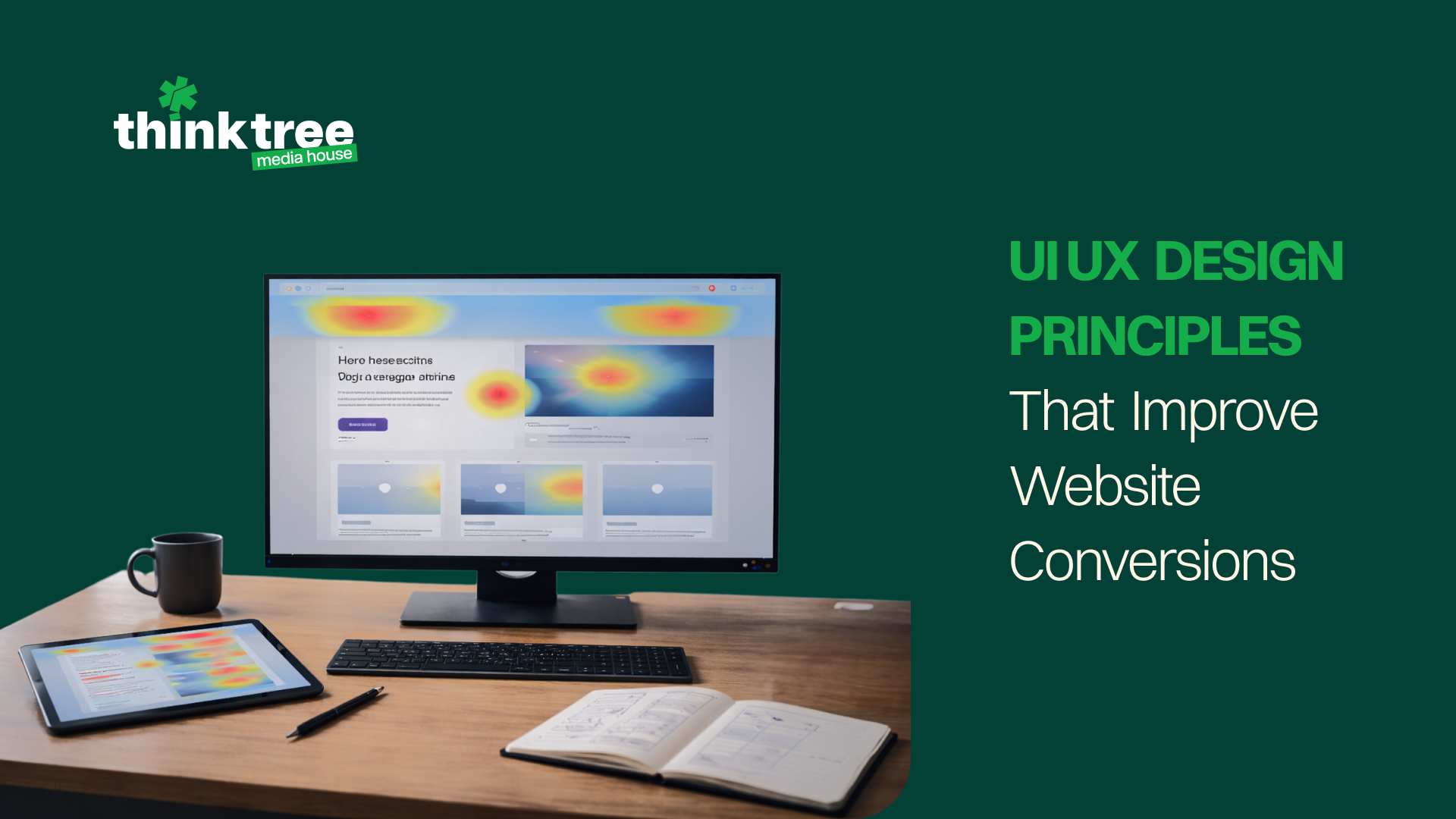
Heatmaps reveal users scan F-patterns, fixating on top-left and center regions. Place key UX design elements like pricing tables or testimonials in these zones. E-commerce sites for automotive accessories see 25% higher add-to-cart rates when product images dominate hero sections with clear “Buy Now” buttons below. Learn more about our visual branding strategies that complement conversion-focused layouts.
Speed Optimization Is Non-Negotiable
Page load times under 2.5 seconds prevent 53% of mobile abandonments. Compress images to WebP, enable lazy loading, and use CDNs to deliver content instantly. A 1-second delay can slash conversions by 7%, making performance a core UX best practice.
Indian D2C brands like boAt prioritize mobile-first responsiveness, ensuring seamless experiences on Jio networks prevalent in Tier-2 cities. Tools like Google PageSpeed Insights help audit and fix bottlenecks quickly. Think Tree Media’s website development services include Core Web Vitals optimization for lightning-fast performance.
Intuitive Navigation Reduces Friction
Confusing menus kill conversions. Limit primary navigation to 5-7 items with thumb-friendly mobile layouts and breadcrumb trails for deeper pages. Users should find checkout or contact forms in under three clicks.
Website conversion optimization thrives on logical information architecture. For gaming venue promotions, a sticky “Find Nearest Location” bar with city selectors cuts drop-offs by guiding regional users effortlessly. Predictive search and mega-men menus further enhance discoverability.
Strategic CTAs and Microcopy Convert
Buttons alone fail; pair them with persuasive microcopy like “Get Your Free Design Quote Today” instead of generic “Submit.” Place CTAs above the fold, mid-page, and at content bottoms, using action-oriented colors like vibrant orange on neutral palettes.
A/B test variations to find winners. SaaS platforms for digital agencies report 42% uplift when CTAs include urgency like “Limited Spots Available.” This UI design tip nudges without pushing, respecting user psychology.
Trust Signals Build Credibility
Incorporate testimonials with photos, star ratings, SSL badges, and client logos near CTAs. Social proof reassures hesitant visitors, boosting conversions by up to 42%. For luxury interior brands, video case studies of Mumbai penthouse transformations convert skeptics into leads.
Privacy statements and secure payment icons further alleviate concerns, especially for high-ticket Indian purchases where trust gaps persist. Strong brand identity design reinforces these trust signals across your digital presence.
Personalization Enhances Relevance
Dynamic UX design elements like geo-targeted greetings (“Deals for Bangalore Shoppers”) or behavior-based recommendations increase engagement. Tools like session replay reveal drop-off points for targeted fixes.
Fashion e-tailers personalize carousels based on past views, lifting repeat purchases by 20%. Balance with privacy compliance to maintain user comfort. Our content marketing strategies can further enhance personalized user experiences.
Mobile-First Responsiveness Scales
With 75% of Indian traffic mobile, design for smallest screens first. Ensure touch targets exceed 44×44 pixels, fluid grids adapt layouts, and forms minimize fields. AMP pages accelerate news-style content for edtech lead gen. Mobile optimization is critical for India’s digital-first audience.
Conclusion
Mastering UI UX design principles transforms websites from static brochures into conversion machines. By applying UX best practices like clarity, hierarchy, speed, and trust-building UX design elements, brands achieve sustainable growth in competitive sectors.
Indian marketers handling furniture, real estate, or gaming campaigns gain outsized ROI from these optimizations. Test iteratively using heatmaps and A/B tools to refine continuously.
Elevate your sites with expert implementation. Think Tree Media delivers website conversion optimization through data-driven UI/UX design services. Explore our comprehensive Services or discover Martech Recommendations. Ready for a free UX audit?
Get in Touch with our design experts today.
